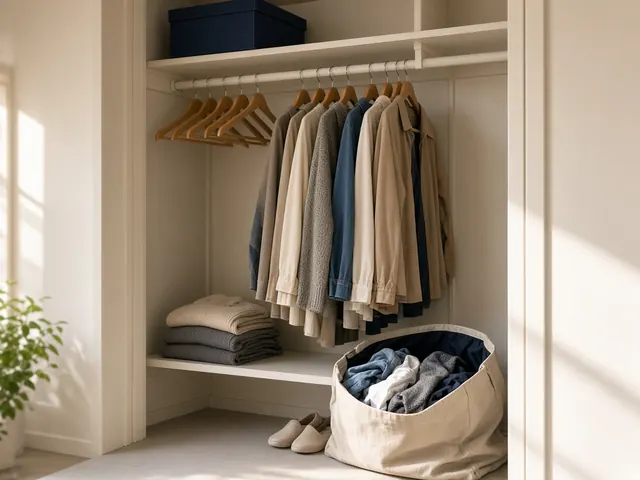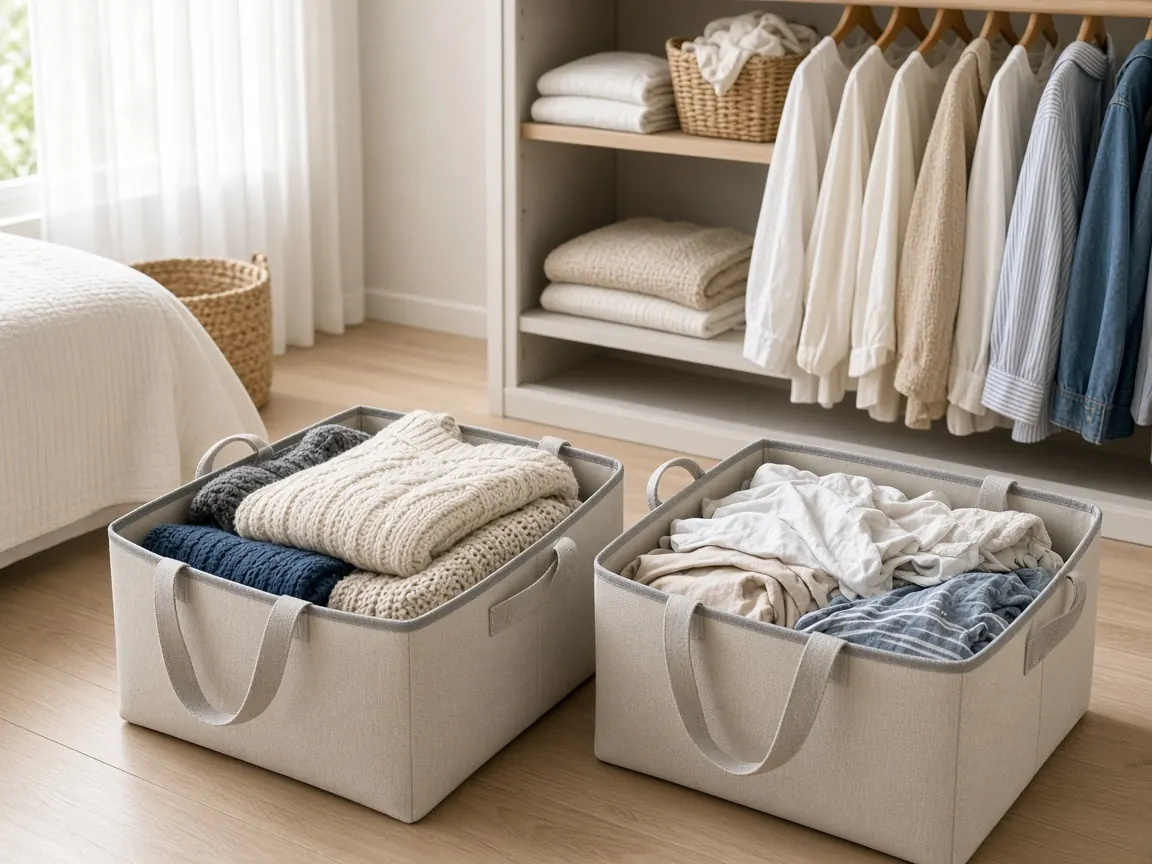
Seasonal clothing rotation is a space strategy for closets that cannot hold every coat and every sandal at once. It is not a shopping holiday and not a demand to own a capsule wardrobe. Move what you cannot wear in the current climate out of the daily rod, label it, and bring it back when weather changes.
US climates vary widely. A mild coastal winter and a Midwest winter need different rotation timing. Use your forecast patterns, not a generic influencer calendar.
What to rotate—and what to leave
Rotate bulky items that steal daily space: heavy coats, thick sweaters, snow boots, and peak-summer-only pieces if your closet is tight. Leave transitional layers if your mornings and afternoons differ. Leave specialty gear you use year-round in its own labeled home.
- Clean items before long storage when practical.
- Use labeled bins or vacuum bags only if you will reopen them on a dated reminder.
- Store off-season clothes somewhere dry and accessible enough for a surprise cold snap.
- Keep one emergency warm layer available even in warm months if your climate swings.
A simple rotation day
- Empty the daily rod section you are rotating.
- Sort with keep / donate / discard before packing anything away.
- Pack keepers by category: coats, knits, footwear.
- Label bins with season and year.
- Hang the incoming season with breathing room.
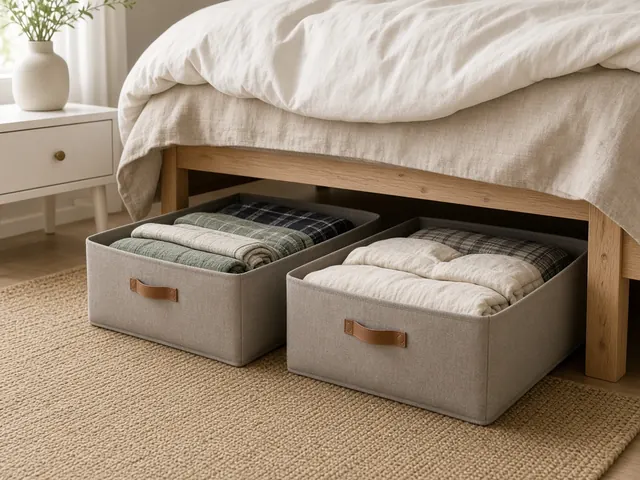
Under-bed storage can hold off-season clothes if labeled—see under-bed and vertical storage. Do not mix off-season clothes with sentimental piles you never open.
Household example
A family in a small townhouse stores winter coats in two labeled bins on a high shelf each April and brings them down in October. Before packing, they donate coats kids outgrew. The entry closet stays usable in summer because it is not a wool archive.
Common mistakes
- Packing clothes you already know you will not wear again.
- Forgetting a mid-season check when weather shifts early.
- Storing damp clothes.
- Hiding off-season bins so well nobody can find a sudden need.
Pair rotation with a light closet reset so you are not rotating clutter. Textile discards and recycling options vary; the EPA recycle overview is a starting point for thinking beyond the trash can.
Conclusion
Seasonal rotation protects daily closet space. Clean, decide, label, store, and set a date to reverse the swap. The system works when bins come back into circulation—not when they become permanent exile.
Putting this into a realistic week
Pick one action from this guide and schedule it on a day you already have a little margin. Write the action in plain language on a calendar, sticky note, or the home organization reset planner. Keep the first attempt smaller than your ambition. A finished short session teaches more than an unfinished heroic one.
If other people share the home, tell them what zone you are finishing and what “done” looks like. Shared expectations prevent someone from refilling a cleared space with a new pile while you are still holding the donate bag. Review the result the next morning: Can you find what you need? Did trash leave? Did donate leave? Those three checks matter more than how the space photographs.
Return to this page only when you need a refresher. The goal is a household system you can maintain with ordinary energy, not a continuous reading project. Combine this guide with related reading linked above when you are ready for the next zone—not all at once.
What this guide does not claim
OrganizedNest publishes educational information for US households. We do not claim that an organized home will fix stress, relationships, finances, or sleep problems. We do not invent professional organizer credentials, before-and-after testimonials, or statistics. We do not sell products or place affiliate shopping links inside guides.
Your home, climate, budget, and household size matter. Adjust any checklist. Skip steps that do not help. If a task involves ladder safety, heavy lifting, or hazardous materials, follow product labels and local rules, and get help when needed. Practical home safety overviews from the U.S. Consumer Product Safety Commission are a useful general reference for household hazards unrelated to organizing fashion.