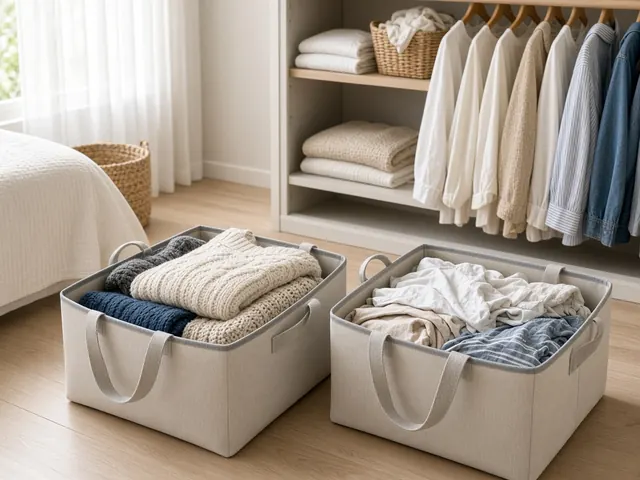
Under-bed and vertical storage can reclaim square footage—or hide problems you will forget until move-out day. Used carefully, these spaces hold labeled, infrequently needed items. Used carelessly, they become dusty landfills.
Keep pathways clear and furniture stable. For household hazard awareness around tipping and clutter, general consumer guidance exists at the CPSC home safety section.
What belongs under the bed
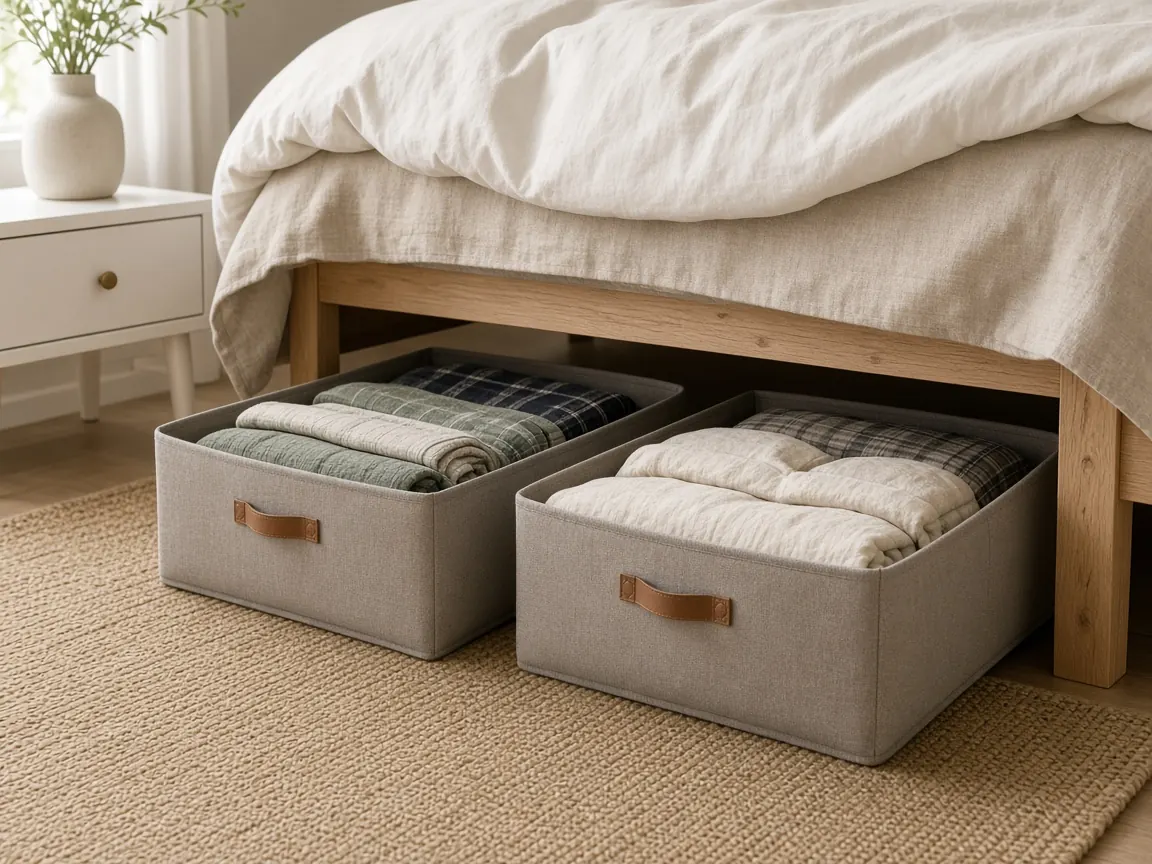
- Off-season clothing in labeled bins.
- Extra bedding sets you actually use for guests.
- Archive papers you must keep, in a water-aware container if risk exists.
- Not: food, damp towels, mystery bags, or anything you need weekly.
Vertical storage that stays usable
Tall shelves should keep heavy items low. Put daily items between shoulder and waist height when possible. Leave a little empty shelf space so returns do not start piles on the floor. In closets, vertical space often beats another floor basket.
- Measure clearance before buying containers.
- Label sides that face outward.
- Set a calendar reminder to review under-bed bins twice yearly.
- Do not stack soft bags that collapse into chaos.
Seasonal clothing pairs naturally with this approach—see seasonal rotation. Apartments benefit from vertical-first thinking in apartment storage.
Household example
A couple stores guest quilts under the bed in two zip bins labeled “guest bedding.” They stop stuffing random cables there. When guests arrive, the hunt takes two minutes instead of twenty.
Common mistakes
- Storing items you will need next week out of reach.
- Forgetting bins exist.
- Blocking under-bed airflow for pets who rest there.
- Overloading vertical shelves beyond furniture ratings.
Conclusion
Hidden storage is a tool for rare items with labels and review dates. Keep weekly items visible. Review twice a year. Empty space is still storage capacity—do not fill every void.
Putting this into a realistic week
Pick one action from this guide and schedule it on a day you already have a little margin. Write the action in plain language on a calendar, sticky note, or the home organization reset planner. Keep the first attempt smaller than your ambition. A finished short session teaches more than an unfinished heroic one.
If other people share the home, tell them what zone you are finishing and what “done” looks like. Shared expectations prevent someone from refilling a cleared space with a new pile while you are still holding the donate bag. Review the result the next morning: Can you find what you need? Did trash leave? Did donate leave? Those three checks matter more than how the space photographs.
Return to this page only when you need a refresher. The goal is a household system you can maintain with ordinary energy, not a continuous reading project. Combine this guide with related reading linked above when you are ready for the next zone—not all at once.
What this guide does not claim
OrganizedNest publishes educational information for US households. We do not claim that an organized home will fix stress, relationships, finances, or sleep problems. We do not invent professional organizer credentials, before-and-after testimonials, or statistics. We do not sell products or place affiliate shopping links inside guides.
Your home, climate, budget, and household size matter. Adjust any checklist. Skip steps that do not help. If a task involves ladder safety, heavy lifting, or hazardous materials, follow product labels and local rules, and get help when needed. Practical home safety overviews from the U.S. Consumer Product Safety Commission are a useful general reference for household hazards unrelated to organizing fashion.