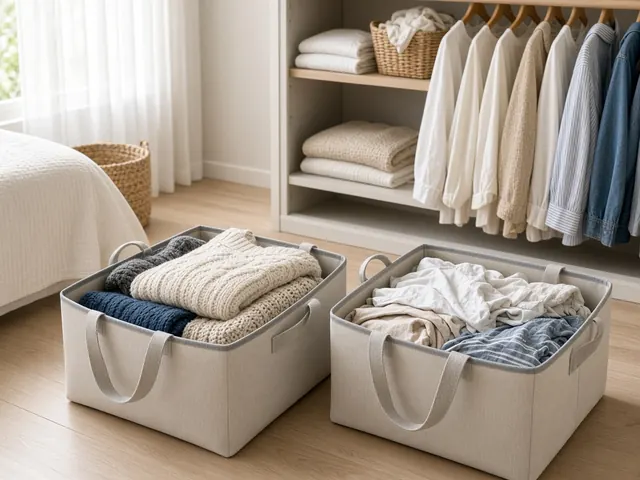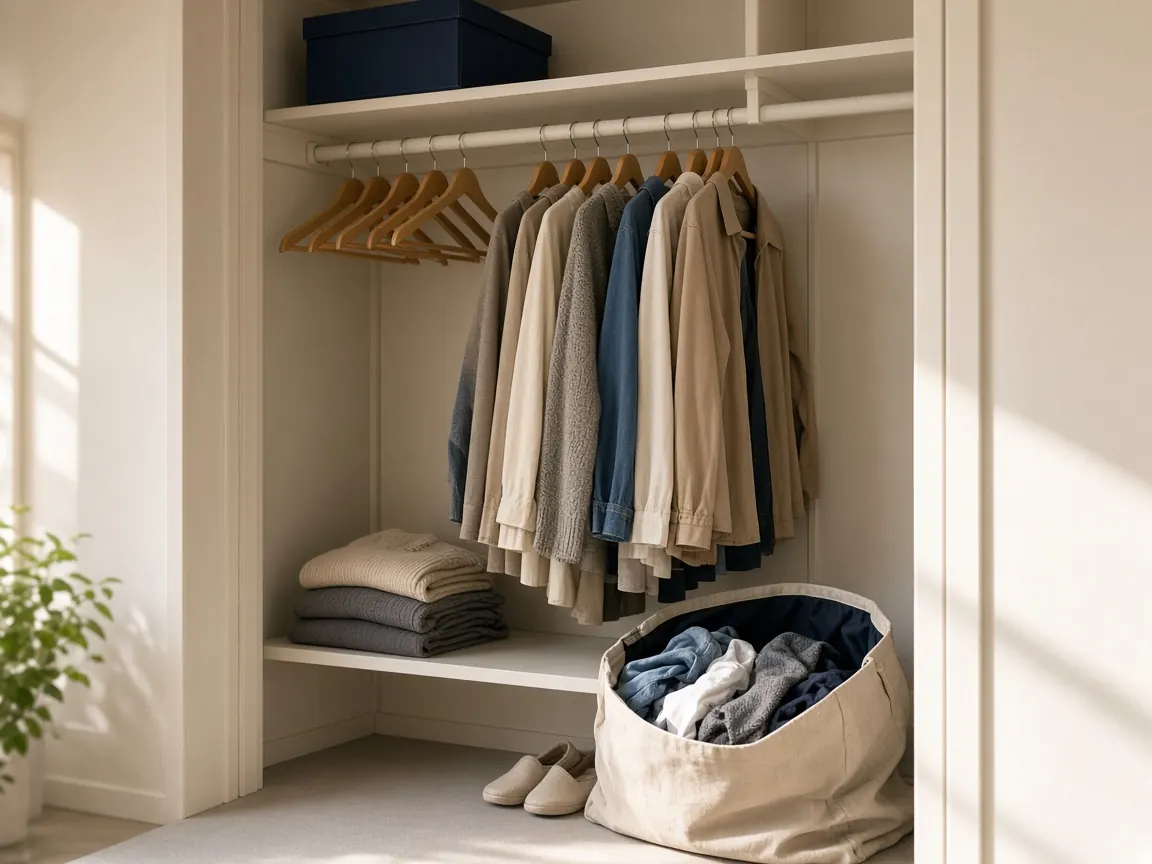
A closet reset is not a fashion makeover. It is a practical pass that makes weekday mornings faster: empty hangers, wearable clothes in front, and a donation bag that actually leaves. Many closets feel small because they are full of clothes nobody wears but nobody has decided about.
OrganizedNest does not invent stylists, body rules, or brand endorsements. Keep what you wear. Release what you do not. Storage products are optional after decisions, not before.
Set rules before you remove hangers
Decide what “wearable” means for this season in your climate. Decide where donations will go. Decide whether off-season clothes will move to a labeled bin or another closet. Without those decisions, the bed becomes a sorting mountain that lasts all week.
- Work one closet section at a time if the closet is large.
- Keep a donate bag open and nearby.
- Keep a repair pile tiny and dated—or skip repairs you will not do.
- Photograph sentimental pieces you will not store if that helps you release volume.
The reset sequence
- Remove everything from one rod or shelf.
- Try a quick honesty check: worn this season? Fits well enough to wear this week? Comfortable enough that you reach for it?
- Hang keepers in a consistent direction with breathing room.
- Fold keepers you prefer folded; avoid unstable towers.
- Bag donate the same day.
Empty hangers belong in a small group, not sprinkled between shirts. Shoes need a floor row or rack that does not block the door. If shoes overflow, see coat closet and shoe storage.
Household example
A teacher’s weekday closet holds twenty tops, but mornings still feel chaotic because laundry never fully returns and “maybe” dresses occupy the front rod. After a ninety-minute reset, work tops hang together, dresses move left, and seven unworn items leave in a donate bag. Mornings improve because the front of the rod matches the real week.
Common mistakes
- Buying matching hangers before removing clothes you do not wear.
- Keeping clothes for a hypothetical future body or job without a dated review.
- Leaving donate bags in the closet, which is just relocation.
- Mixing seasonal storage with daily wear so winter coats block summer shirts—use seasonal rotation.
Sorting decisions map cleanly to keep / donate / discard. Damaged textiles that cannot be donated may belong in textile recycling where available, or trash according to local rules. The EPA recycling overview is a starting pointer; local programs vary.
Maintenance
One-in, one-out is optional, not moral law. A lighter maintenance habit: when laundry is put away, notice if the rod is too tight. When seasons change, schedule a short rotation. When you buy something, decide what it replaces before the tag comes off.
Conclusion
A simple closet system favors wearable clothes, empty space, and exits that leave the home. Reset once with honesty, then maintain with laundry put-away and seasonal checks. The goal is a closet you can close and a morning that does not begin with negotiation.
Putting this into a realistic week
Pick one action from this guide and schedule it on a day you already have a little margin. Write the action in plain language on a calendar, sticky note, or the home organization reset planner. Keep the first attempt smaller than your ambition. A finished short session teaches more than an unfinished heroic one.
If other people share the home, tell them what zone you are finishing and what “done” looks like. Shared expectations prevent someone from refilling a cleared space with a new pile while you are still holding the donate bag. Review the result the next morning: Can you find what you need? Did trash leave? Did donate leave? Those three checks matter more than how the space photographs.
Return to this page only when you need a refresher. The goal is a household system you can maintain with ordinary energy, not a continuous reading project. Combine this guide with related reading linked above when you are ready for the next zone—not all at once.
What this guide does not claim
OrganizedNest publishes educational information for US households. We do not claim that an organized home will fix stress, relationships, finances, or sleep problems. We do not invent professional organizer credentials, before-and-after testimonials, or statistics. We do not sell products or place affiliate shopping links inside guides.
Your home, climate, budget, and household size matter. Adjust any checklist. Skip steps that do not help. If a task involves ladder safety, heavy lifting, or hazardous materials, follow product labels and local rules, and get help when needed. Practical home safety overviews from the U.S. Consumer Product Safety Commission are a useful general reference for household hazards unrelated to organizing fashion.