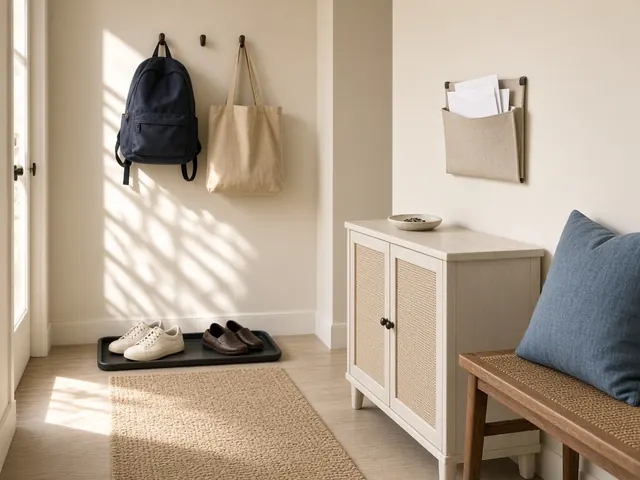
Coat closets and shoe storage fail when they try to hold every season and every rarely worn pair at the front edge. A working system keeps current-weather coats reachable, gives shoes a bounded home, and stores overflow elsewhere with labels.
This is educational guidance for US homes with weather that actually changes. It is not a renovation plan.
Coat closet basics
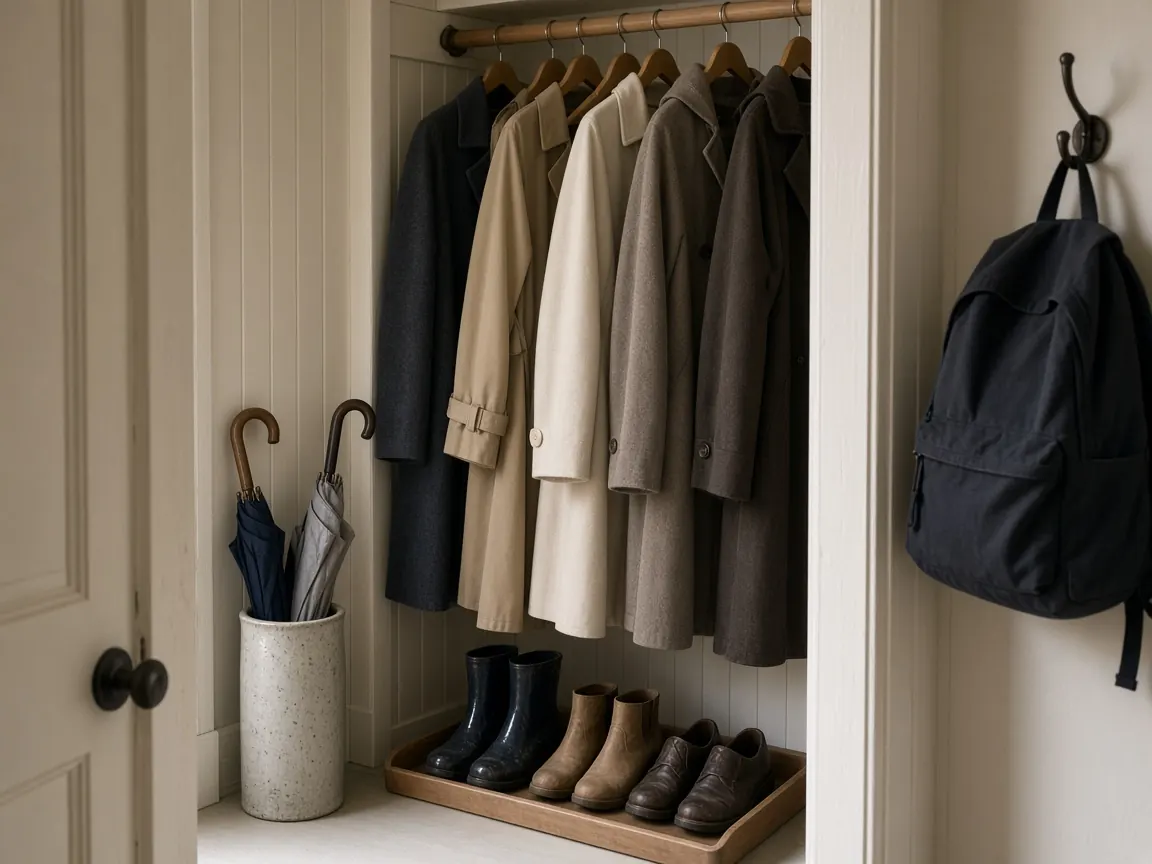
- Current coats at the front; off-season coats rotated out.
- Hooks for backpacks and bags if the closet is also an entry hub.
- A flashlight or small emergency note if you store household kit items—see general preparedness ideas at Ready.gov Build A Kit without turning the closet into a warehouse.
- Space to close the door.
If the closet is shallow, use fewer hangers and more hooks. If it is deep, avoid burying daily coats behind formal wear you use twice a year.
Shoes without a shoe explosion
Give each person a shoe count that fits the tray or rack. Extra pairs rotate seasonally or live in bedrooms. Wet shoes need a tray that protects floors. Repair or recycle shoes you will not wear; do not store holes as potential.
- Empty the closet floor.
- Pair shoes and discard true discards.
- Place daily shoes on the tray.
- Box or bin off-season shoes with labels.
- Wipe the floor and stop.
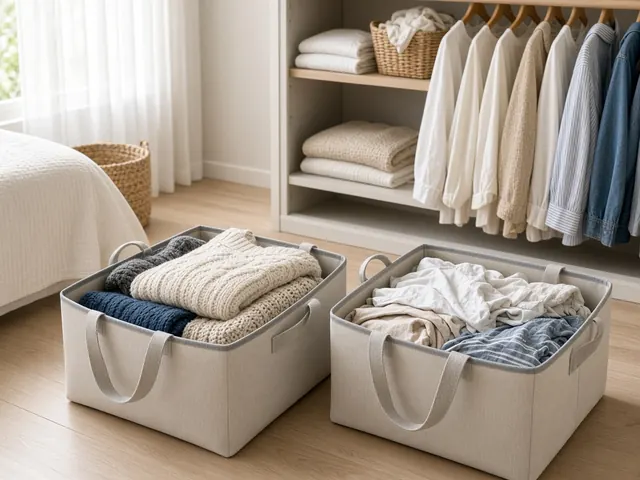
See seasonal clothing rotation and entryway drop zones for related traffic patterns.
Household example
A household with kids keeps only current school shoes and one sport pair at the entry. Dress shoes live in bedroom cubbies. The coat closet door closes again, which sounds trivial until you remember how long it did not.
Common mistakes
- Using the closet as donation storage.
- Keeping broken umbrellas.
- Blocking water heater or electrical panels if the “closet” shares utility space—follow safety clearances.
- Ignoring trip hazards near stairs; general home safety context appears in CPSC guides.
Conclusion
Coat and shoe systems work when daily items stay reachable and extras leave the front line. Rotate, bound the shoe count, protect floors from wet gear, and keep exits clear.
Putting this into a realistic week
Pick one action from this guide and schedule it on a day you already have a little margin. Write the action in plain language on a calendar, sticky note, or the home organization reset planner. Keep the first attempt smaller than your ambition. A finished short session teaches more than an unfinished heroic one.
If other people share the home, tell them what zone you are finishing and what “done” looks like. Shared expectations prevent someone from refilling a cleared space with a new pile while you are still holding the donate bag. Review the result the next morning: Can you find what you need? Did trash leave? Did donate leave? Those three checks matter more than how the space photographs.
Return to this page only when you need a refresher. The goal is a household system you can maintain with ordinary energy, not a continuous reading project. Combine this guide with related reading linked above when you are ready for the next zone—not all at once.
What this guide does not claim
OrganizedNest publishes educational information for US households. We do not claim that an organized home will fix stress, relationships, finances, or sleep problems. We do not invent professional organizer credentials, before-and-after testimonials, or statistics. We do not sell products or place affiliate shopping links inside guides.
Your home, climate, budget, and household size matter. Adjust any checklist. Skip steps that do not help. If a task involves ladder safety, heavy lifting, or hazardous materials, follow product labels and local rules, and get help when needed. Practical home safety overviews from the U.S. Consumer Product Safety Commission are a useful general reference for household hazards unrelated to organizing fashion.