Laundry piles grow when the workflow stops at “clean but not put away.” A usable laundry system moves clothes from hamper to washer to dryer to fold to drawers with as few parking spots as possible. Perfection is optional. Finished put-away is the point.
Follow your machine manuals for load size, cycle choice, and safety. Energy-aware habits are discussed in general consumer terms by the U.S. Department of Energy’s Energy Saver resources; treat those as optional efficiency tips, not organizing dogma.
Design the path
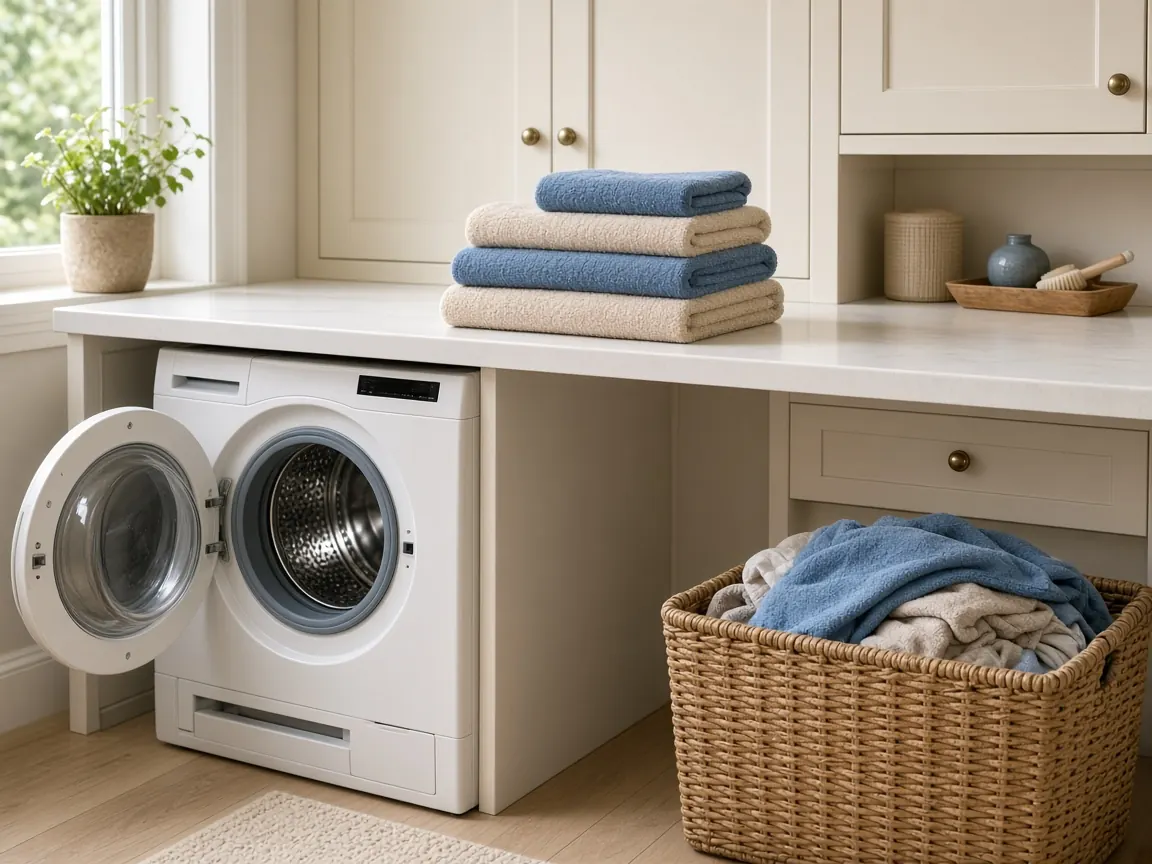
Every household needs: a hamper that is easy to use, a sorting method simple enough to keep, a folding surface, and time reserved for put-away. If clean clothes live on a couch for days, the couch has become the dresser. Change the path, not only the detergent.
- One hamper per bedroom or one central hamper if that works better.
- Sort into few categories: lights, darks, towels/sheets, delicates if required.
- Fold or hang within a set window the same day when possible.
- Return empties: detergent closed, lint trap cleared per manual.
A practical weekly rhythm
- Start a load when the hamper hits a visible fill line—not when clothes cover the floor.
- Move washed clothes to dry without overnight forgetting when you can.
- Fold on a clear surface; if the surface is covered, clear it first for five minutes.
- Put away before starting the next entertainment block.
- Wash cleaning cloths and towels on a predictable day.
Connect laundry to weekend resets if weekdays are too tight. Entry clutter from sports bags overlaps with drop zones.
Household example
A two-adult household stops leaving clean baskets in the hallway. They set a rule: no new wash cycle until the previous basket is empty. Volume of laundry did not change. Parking spots did. The hallway became a hallway again.
Common mistakes
- Too many sort categories that nobody maintains.
- Using the guest bed as permanent folding storage.
- Ignoring lint and hose safety guidance in manuals.
- Washing without a put-away plan.
Routine cleaning of laundry surfaces fits ordinary household cleaning practices such as those outlined by the CDC.
Conclusion
Laundry workflow succeeds when clean clothes have a last step. Sort simply, dry fully, fold once, put away, then stop. Fewer parking spots beat more products.
Putting this into a realistic week
Pick one action from this guide and schedule it on a day you already have a little margin. Write the action in plain language on a calendar, sticky note, or the home organization reset planner. Keep the first attempt smaller than your ambition. A finished short session teaches more than an unfinished heroic one.
If other people share the home, tell them what zone you are finishing and what “done” looks like. Shared expectations prevent someone from refilling a cleared space with a new pile while you are still holding the donate bag. Review the result the next morning: Can you find what you need? Did trash leave? Did donate leave? Those three checks matter more than how the space photographs.
Return to this page only when you need a refresher. The goal is a household system you can maintain with ordinary energy, not a continuous reading project. Combine this guide with related reading linked above when you are ready for the next zone—not all at once.
What this guide does not claim
OrganizedNest publishes educational information for US households. We do not claim that an organized home will fix stress, relationships, finances, or sleep problems. We do not invent professional organizer credentials, before-and-after testimonials, or statistics. We do not sell products or place affiliate shopping links inside guides.
Your home, climate, budget, and household size matter. Adjust any checklist. Skip steps that do not help. If a task involves ladder safety, heavy lifting, or hazardous materials, follow product labels and local rules, and get help when needed. Practical home safety overviews from the U.S. Consumer Product Safety Commission are a useful general reference for household hazards unrelated to organizing fashion.