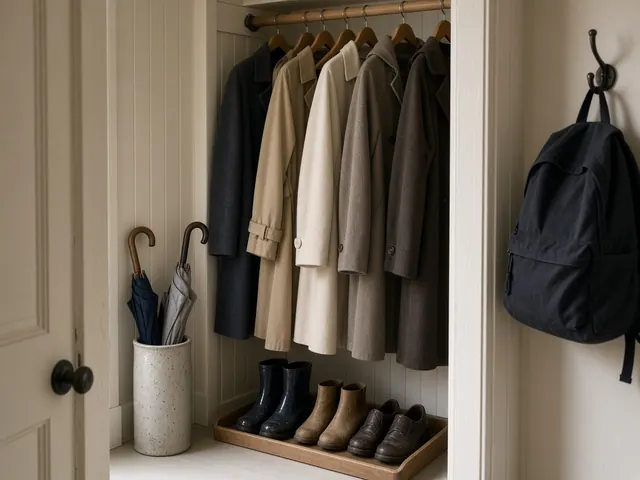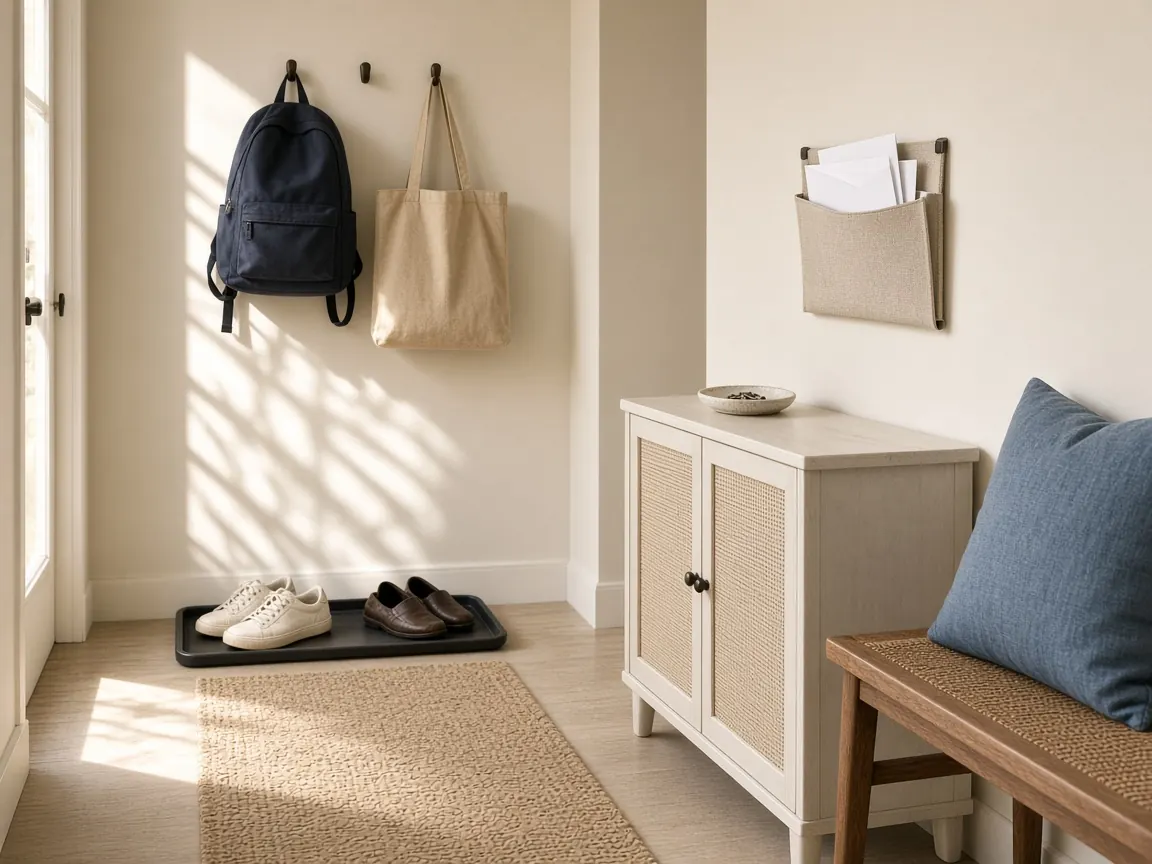
An entryway drop zone is a small landing system for the things that arrive with you: shoes, bags, keys, mail, and umbrellas. Without one, those items migrate to kitchens, couches, and bedroom floors. With one, the rest of the home stays easier to reset.
You do not need a mudroom. You need a defined spot that everyone can find, including guests who only need a place for shoes.
Core pieces of a drop zone
- A shoe landing: tray, mat edge, or low shelf.
- A bag hook or chair that is not also laundry storage.
- A key dish or wall hook at a consistent height.
- A mail inbox that is not the dining table.
- A wet zone for umbrellas and snowy boots when climate requires it.
Keep the zone small on purpose. Oversized consoles become new clutter surfaces. If floor space is tight, go vertical with hooks—see also apartment storage.
Setup steps
- Clear the entry completely once.
- Choose homes for shoes, bags, keys, and mail.
- Remove furniture that only collects piles.
- Add a trash/recycle mini option for junk mail if space allows.
- Agree on a household rule: bags hang here before they enter living rooms.
Household example
A renter with a narrow hallway installs three sturdy hooks, a slim shoe tray, and a wall file for mail. Keys land in a ceramic dish. The living room stops receiving backpacks. The change took under an hour and no renovation.
Safety matters around doors: keep exits clear. General home safety reminders are available from the CPSC. Do not block egress with shoe mountains.
Daily maintenance
Include the entry in the evening reset: shoes on the tray, bags hung, mail sorted into inbox vs recycle. Weekly, return stray items and wipe the tray. For coats and overflow footwear, use coat closet and shoe storage.
Common mistakes
- Creating a beautiful console that becomes a package warehouse.
- Having hooks too high for the people who need them.
- Allowing the drop zone to hold donations “for now.”
- Ignoring wet items that damage floors.
Conclusion
A drop zone is a traffic tool. Give arriving items a first home, keep exits clear, and reset the zone nightly. The quieter living room is usually a side effect of a better doorway.
Putting this into a realistic week
Pick one action from this guide and schedule it on a day you already have a little margin. Write the action in plain language on a calendar, sticky note, or the home organization reset planner. Keep the first attempt smaller than your ambition. A finished short session teaches more than an unfinished heroic one.
If other people share the home, tell them what zone you are finishing and what “done” looks like. Shared expectations prevent someone from refilling a cleared space with a new pile while you are still holding the donate bag. Review the result the next morning: Can you find what you need? Did trash leave? Did donate leave? Those three checks matter more than how the space photographs.
Return to this page only when you need a refresher. The goal is a household system you can maintain with ordinary energy, not a continuous reading project. Combine this guide with related reading linked above when you are ready for the next zone—not all at once.
What this guide does not claim
OrganizedNest publishes educational information for US households. We do not claim that an organized home will fix stress, relationships, finances, or sleep problems. We do not invent professional organizer credentials, before-and-after testimonials, or statistics. We do not sell products or place affiliate shopping links inside guides.
Your home, climate, budget, and household size matter. Adjust any checklist. Skip steps that do not help. If a task involves ladder safety, heavy lifting, or hazardous materials, follow product labels and local rules, and get help when needed. Practical home safety overviews from the U.S. Consumer Product Safety Commission are a useful general reference for household hazards unrelated to organizing fashion.