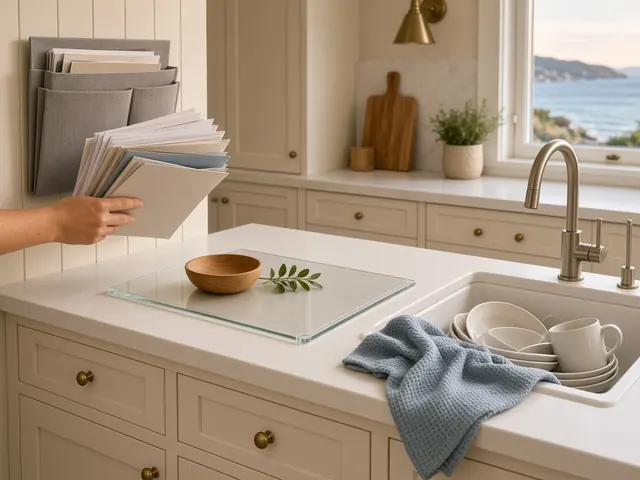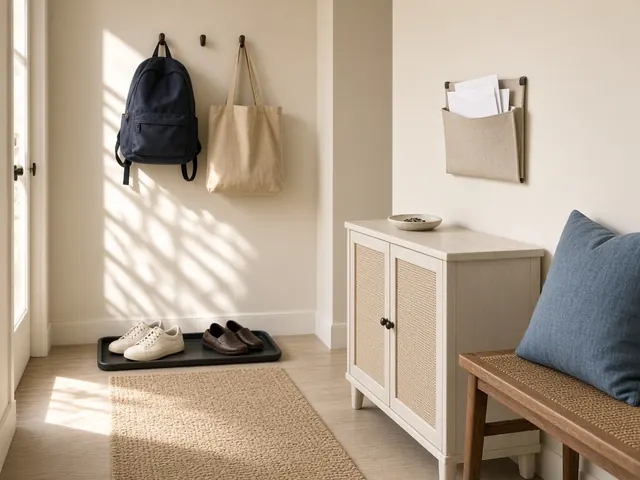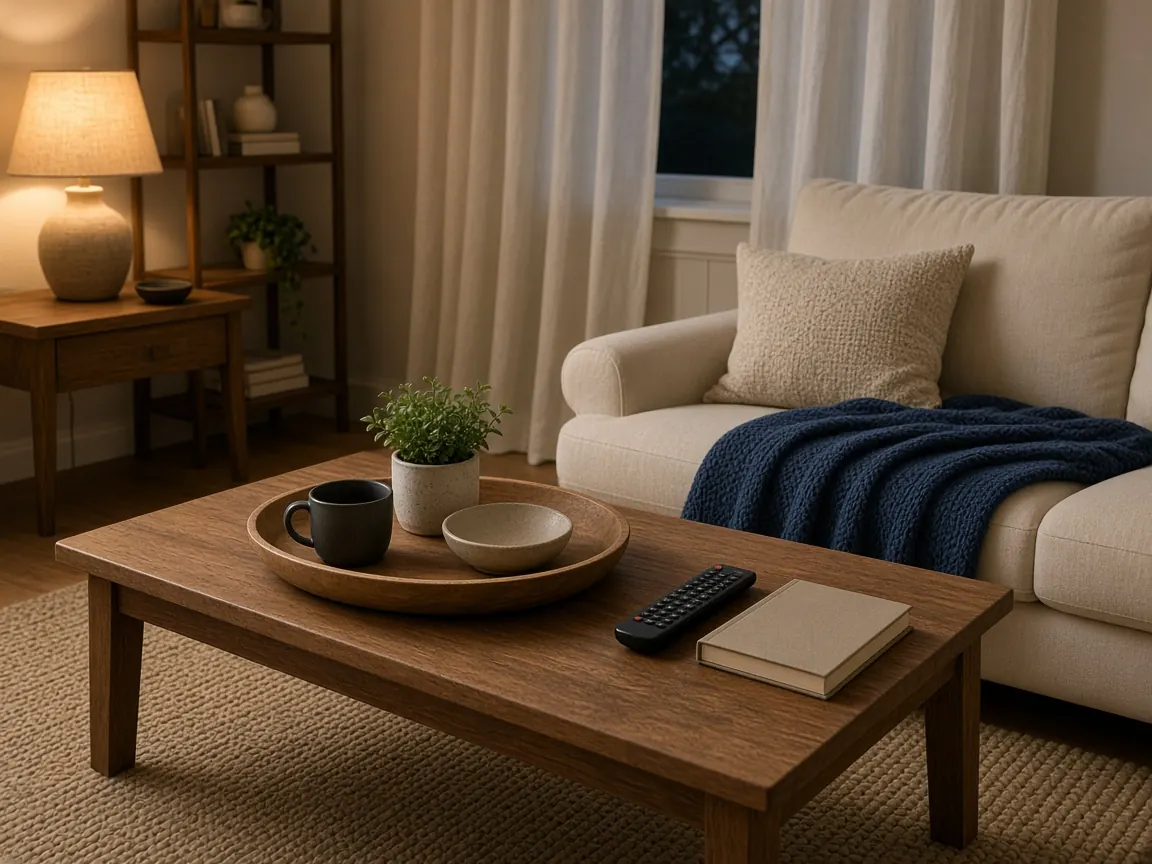
The ten-minute evening reset is a closing ritual for the home’s main surfaces. It does not deep-clean. It does not demand a perfect house before bed. It returns items to homes, starts the kitchen sink in the right direction, and stages tomorrow’s bag so mornings begin less behind.
Guilt is not a tool here. If you miss a night, begin again the next night. OrganizedNest will not claim that ten minutes will fix burnout or family conflict.
A simple loop
- Set a ten-minute timer.
- Clear kitchen counters into homes or dishwasher—see counter reset.
- Reset the entry: shoes, bags, keys—drop zone.
- Return living-room clutter to rooms or a donate box.
- Stage tomorrow’s bag or lunch items if that helps your household.
- Stop when the timer ends, even if unfinished.
- Music optional; arguments optional to skip.
- Children can own a tiny sub-task if appropriate.
- Do not start a new declutter project mid-reset.
Household example
A remote worker finds evenings disappear into scrolling while mail spreads across the table. A ten-minute timer after dishes becomes the new default. Mail lands in an inbox, cups leave the coffee table, and the entry shoes line up. The home is not showroom-ready. It is ready enough for tomorrow.
Common mistakes
- Turning ten minutes into a resentful hour.
- Cleaning bathrooms mid-loop.
- Expecting one person to reset everyone else’s chaos without agreements.
- Skipping trash takeout so the reset smells unfinished.
Surface cleaning can follow ordinary habits described by the CDC cleaning page. For bigger passes, use a weekend plan instead of overloading weeknights.
Track tasks in the reset planner if checkboxes help you start.
Conclusion
Ten minutes is a boundary that makes resetting repeatable. Clear, return, stage, stop. Consistency beats intensity for everyday homes.
Putting this into a realistic week
Pick one action from this guide and schedule it on a day you already have a little margin. Write the action in plain language on a calendar, sticky note, or the home organization reset planner. Keep the first attempt smaller than your ambition. A finished short session teaches more than an unfinished heroic one.
If other people share the home, tell them what zone you are finishing and what “done” looks like. Shared expectations prevent someone from refilling a cleared space with a new pile while you are still holding the donate bag. Review the result the next morning: Can you find what you need? Did trash leave? Did donate leave? Those three checks matter more than how the space photographs.
Return to this page only when you need a refresher. The goal is a household system you can maintain with ordinary energy, not a continuous reading project. Combine this guide with related reading linked above when you are ready for the next zone—not all at once.
What this guide does not claim
OrganizedNest publishes educational information for US households. We do not claim that an organized home will fix stress, relationships, finances, or sleep problems. We do not invent professional organizer credentials, before-and-after testimonials, or statistics. We do not sell products or place affiliate shopping links inside guides.
Your home, climate, budget, and household size matter. Adjust any checklist. Skip steps that do not help. If a task involves ladder safety, heavy lifting, or hazardous materials, follow product labels and local rules, and get help when needed. Practical home safety overviews from the U.S. Consumer Product Safety Commission are a useful general reference for household hazards unrelated to organizing fashion.