Kitchen counters collect unfinished business: mail, lunchboxes, vitamins, tools from a quick repair, and bags that never quite made it to a closet. A counter reset is not a deep clean of the whole kitchen. It is a short loop that returns the counter to a usable landing strip so cooking and homework can happen without shoving piles aside.
This guide is for everyday US kitchens. It does not sell organizers, rank countertop appliances, or claim that a clear counter equals a perfect life. Food-safety details always follow package labels and guidance such as the USDA notes on food product dating when you decide what to keep in view.
What a reset includes—and what it skips
A reset clears what does not belong, wipes crumbs, and leaves a small set of daily tools if your household truly uses them. It skips scrubbing grout, reorganizing every cabinet, and photographing the result for social media. Those projects can wait for a weekend plan.
Define “belongs on the counter” before you start. Many households do well with: a kettle or coffee tool, a knife block or utensil crock, soap by the sink, and one tray for frequently used oils or medicines that must stay accessible. Everything else needs a home elsewhere—or an exit.
A fifteen-minute weeknight loop
- Set a timer for fifteen minutes.
- Group items into: fridge/pantry return, mail/inbox, elsewhere room, trash/recycle, donate.
- Move food first so perishables are not forgotten on a warm counter.
- Wipe one continuous path from sink to stove.
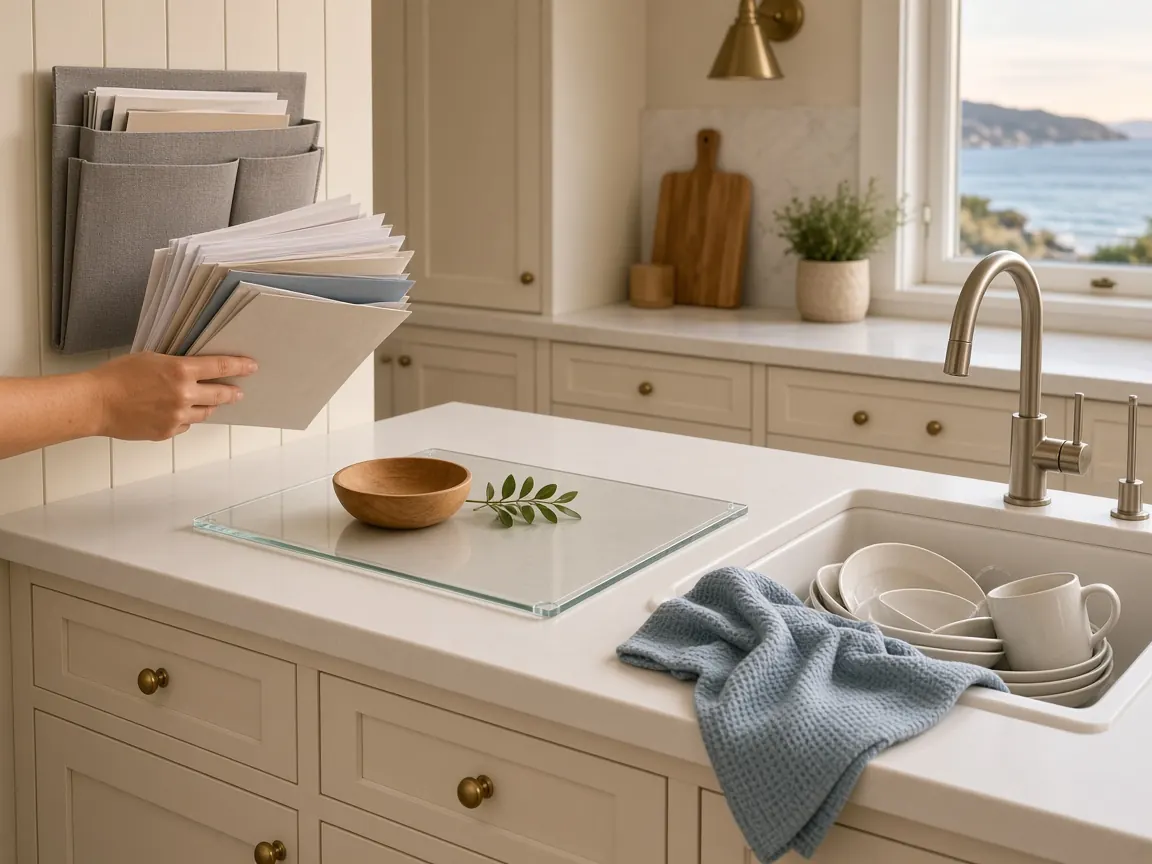
- Leave one clear stretch of counter open—enough to chop or set a backpack down briefly.
- Mail leaves the cooking zone for a defined inbox.
- School papers get a folder, not a pasta-sauce neighbor.
- Dirty dishes start in the sink or dishwasher, not a “later” stack.
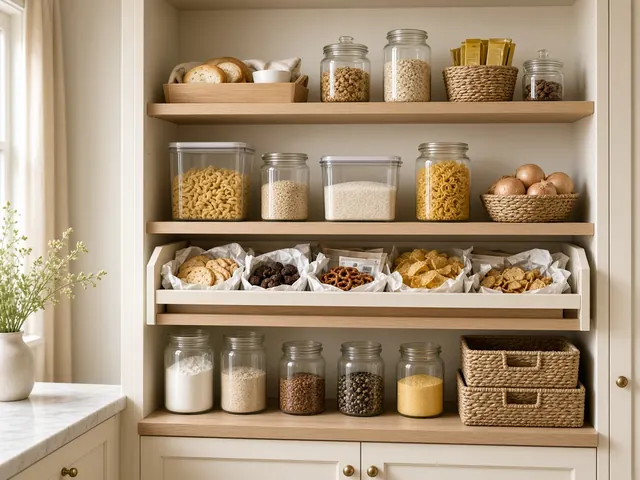
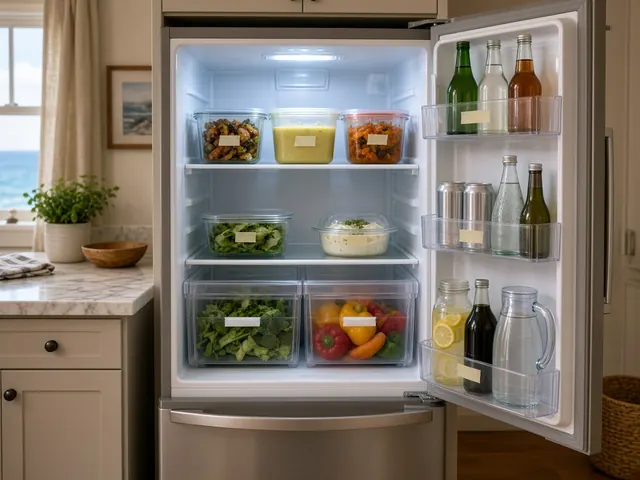
For broader kitchen systems, see pantry zones and fridge and freezer organization. The counter stays clearer when food has a readable home behind a door.
Household example
A family of four uses the island as homework central after school. By 7 p.m. the island holds Chromebooks, snack plates, a Amazon box, and tomorrow’s permission slip. Their reset rule is simple: devices charge on a hallway shelf, papers go in a wall folder by the door, plates enter the dishwasher, and the box is broken down the same night. The island becomes a counter again, not a staging warehouse.
Another household lives alone in a studio. Their reset is shorter: wash the knife and board, return spices to a tray, put the mail in a single clip by the entry, wipe once. Small homes benefit even more from counters that reset nightly because there is nowhere else for overflow to hide.
Common mistakes
- Leaving “decorative” clutter that is actually unused appliances.
- Using the counter as long-term vitamin storage when a cabinet shelf would do.
- Skipping the wipe, so grit invites more dumping.
- Starting a pantry overhaul mid-reset and blowing the timer.
- Feeling guilty when fifteen minutes only clears half—stop anyway and finish tomorrow.
Routine surface cleaning habits described by the CDC fit naturally at the end of a reset. Soap, water, and a dry towel handle most ordinary messes.
Tie the reset to a daily rhythm
Attach the counter reset to something you already do: after dinner dishes, after packing lunches, or before the evening show. Habit stacking beats willpower. The ten-minute evening reset can include the kitchen as its first stop. If you like checklists, add the task in the reset planner.
Conclusion
A kitchen counter reset is a short, honest loop: remove what does not cook, return food, start dishes, wipe once, leave a landing strip. Done most weeknights, it prevents the weekend from becoming a rescue mission. Clear counters are not a personality. They are a maintained edge.
Putting this into a realistic week
Pick one action from this guide and schedule it on a day you already have a little margin. Write the action in plain language on a calendar, sticky note, or the home organization reset planner. Keep the first attempt smaller than your ambition. A finished short session teaches more than an unfinished heroic one.
If other people share the home, tell them what zone you are finishing and what “done” looks like. Shared expectations prevent someone from refilling a cleared space with a new pile while you are still holding the donate bag. Review the result the next morning: Can you find what you need? Did trash leave? Did donate leave? Those three checks matter more than how the space photographs.
Return to this page only when you need a refresher. The goal is a household system you can maintain with ordinary energy, not a continuous reading project. Combine this guide with related reading linked above when you are ready for the next zone—not all at once.
What this guide does not claim
OrganizedNest publishes educational information for US households. We do not claim that an organized home will fix stress, relationships, finances, or sleep problems. We do not invent professional organizer credentials, before-and-after testimonials, or statistics. We do not sell products or place affiliate shopping links inside guides.
Your home, climate, budget, and household size matter. Adjust any checklist. Skip steps that do not help. If a task involves ladder safety, heavy lifting, or hazardous materials, follow product labels and local rules, and get help when needed. Practical home safety overviews from the U.S. Consumer Product Safety Commission are a useful general reference for household hazards unrelated to organizing fashion.