Refrigerators hide food the way closets hide clothes: behind something taller, in an unlabeled container, or in a drawer nobody opens until a smell arrives. Organization here is less about aesthetics and more about seeing what you already have so meals and shopping lists stay honest.
OrganizedNest offers educational guidance for US households. This is not a food-safety certification course. For dating and handling rules, follow package instructions and resources such as the USDA FSIS page on food product dating and broader food safety education.
Zones that match how you cook
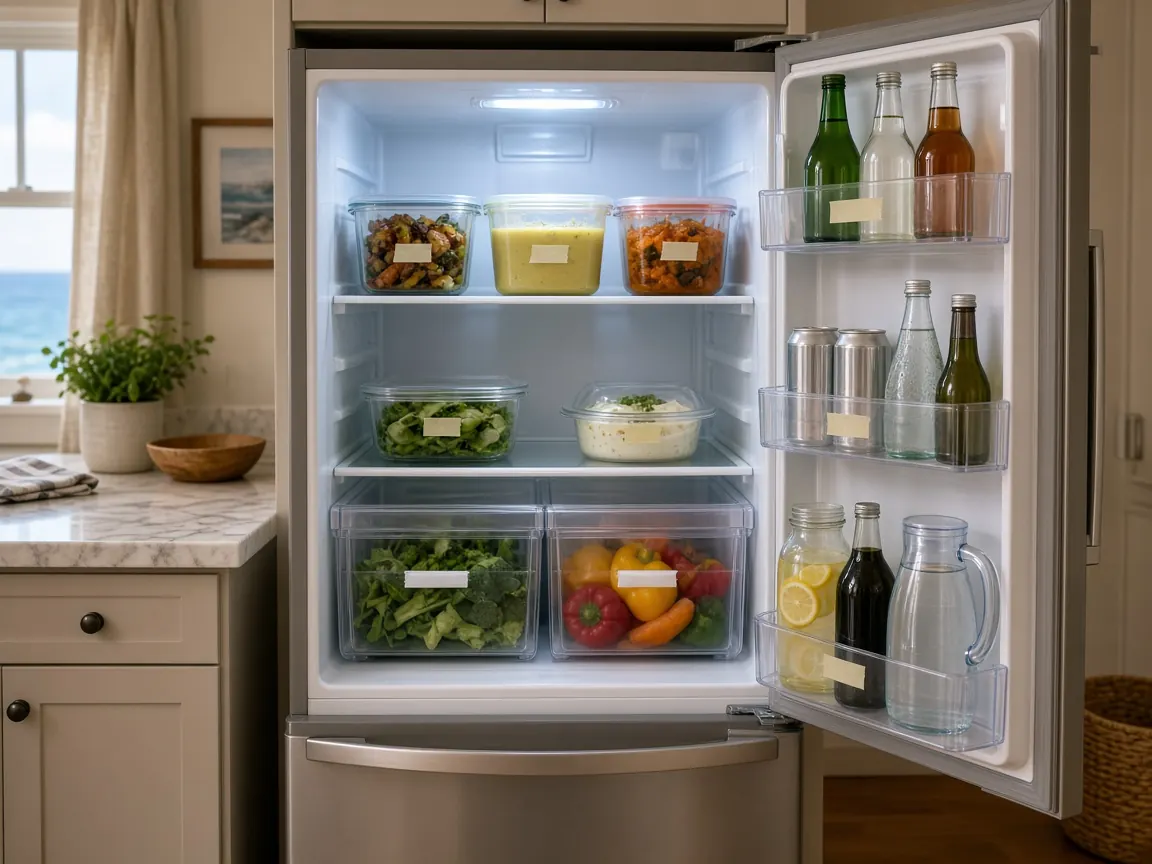
Give leftovers a single eye-level shelf or clear bin. Give drinks a consistent door row if your door stays cold enough for what you store there—check your appliance manual. Keep raw meats on a lower shelf in sealed containers so drips cannot reach ready-to-eat foods. Produce drawers work best when they are not stuffed past airflow.
Freezer zones can be simpler: meats, prepared meals, vegetables, bread/bakery, and ice. Labels with names and dates beat mystery foil. Masking tape and a marker are enough. If labels feel fussy, use clear containers and a weekly check instead.
Household example
A household of three keeps ordering takeout because leftovers hide behind a gallon of tea. They create a leftover tray at eye level and a rule: leftovers move to the front after dinner. Within a week, lunches improve without a new meal plan. The system was visibility, not a personality upgrade.
A weekly ten-minute check
- Open the leftover shelf first. Eat, freeze, or discard according to your judgment and food-safety guidance.
- Wipe one sticky shelf.
- Face bottles forward.
- Note three items to use before shopping.
- Check the freezer door for frost-blocked labels.
- Open containers get lids or leave.
- Raw proteins stay contained and low.
- Freezer items are named, not guessed.
- Expired or questionable food exits—do not “hope.”
Common mistakes
- Overfilling until drawers cannot close, which warms food and hides items.
- Storing chemicals or craft supplies in the fridge “temporarily.”
- Freezing unlabeled leftovers that become archaeology.
- Skipping the counter and pantry—fridge organization fails when groceries never have a landing plan. See pantry zones and counter resets.
Linking fridge work to the rest of the kitchen
When you unload groceries, put new items behind older ones of the same type when quality dating makes that sensible. When you cook, start by scanning leftovers. When you do a weekend reset, include a fridge shelf wipe as a bounded task, not an all-day purge.
Cleaning shelves is routine household cleaning. Guidance from the CDC on cleaning your home can help you choose ordinary soap-and-water habits for surfaces; organization still depends on decisions more than disinfectant choice.
Conclusion
Fridge and freezer organization is a visibility project: zones you understand, leftovers you can see, labels that tell the truth, and a weekly check that prevents surprise smells. Keep it practical. Perfect photographs are optional; edible food you remember is the point.
Putting this into a realistic week
Pick one action from this guide and schedule it on a day you already have a little margin. Write the action in plain language on a calendar, sticky note, or the home organization reset planner. Keep the first attempt smaller than your ambition. A finished short session teaches more than an unfinished heroic one.
If other people share the home, tell them what zone you are finishing and what “done” looks like. Shared expectations prevent someone from refilling a cleared space with a new pile while you are still holding the donate bag. Review the result the next morning: Can you find what you need? Did trash leave? Did donate leave? Those three checks matter more than how the space photographs.
Return to this page only when you need a refresher. The goal is a household system you can maintain with ordinary energy, not a continuous reading project. Combine this guide with related reading linked above when you are ready for the next zone—not all at once.
What this guide does not claim
OrganizedNest publishes educational information for US households. We do not claim that an organized home will fix stress, relationships, finances, or sleep problems. We do not invent professional organizer credentials, before-and-after testimonials, or statistics. We do not sell products or place affiliate shopping links inside guides.
Your home, climate, budget, and household size matter. Adjust any checklist. Skip steps that do not help. If a task involves ladder safety, heavy lifting, or hazardous materials, follow product labels and local rules, and get help when needed. Practical home safety overviews from the U.S. Consumer Product Safety Commission are a useful general reference for household hazards unrelated to organizing fashion.