Pantries become chaotic when every package competes for the same front row. Zones fix that by grouping food by how you use it—breakfast, dinner staples, snacks, baking, beverages—so you can see what you own before you shop again. Visibility prevents duplicate buys more reliably than a fancy container set.
This guide stays educational. It does not recommend brands, sell canisters, or guarantee you will never waste food. For dating and safety questions, rely on labels and resources such as USDA Food Safety Education and product dating guidance.
Design zones around real meals
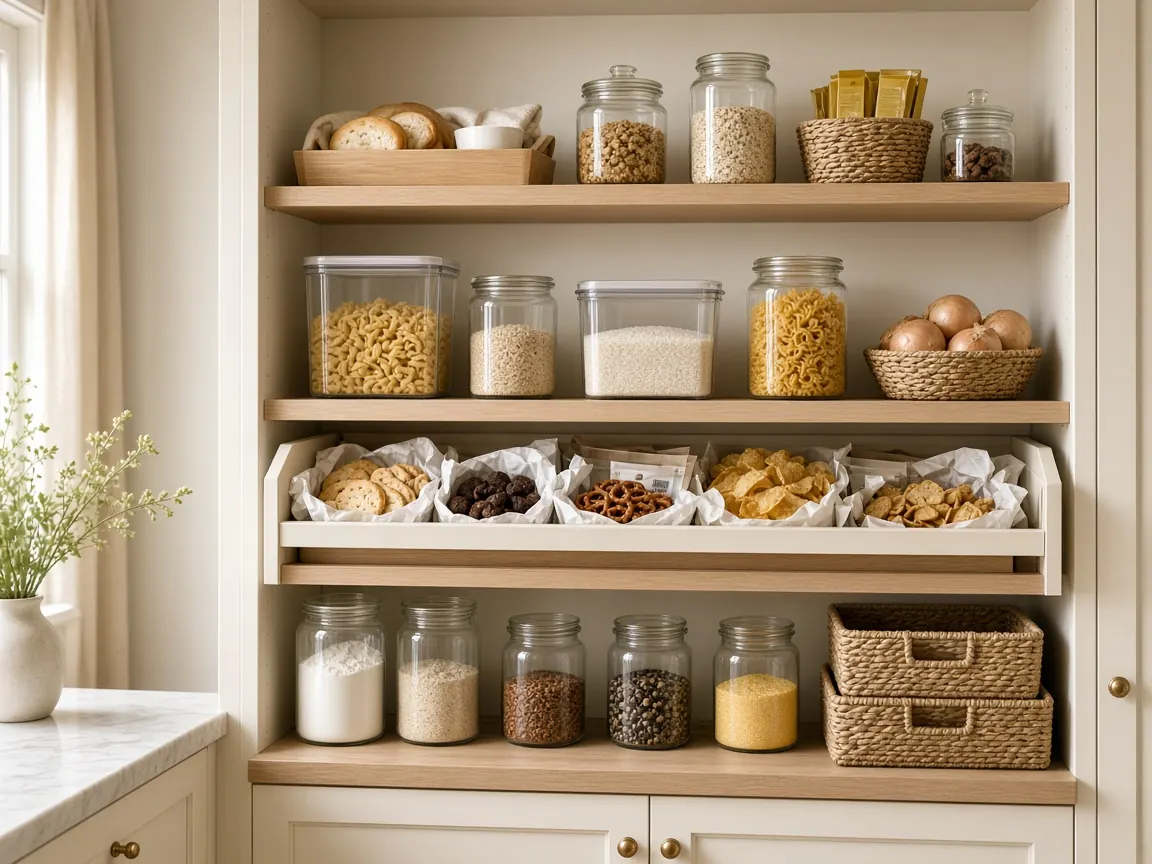
Walk through a normal week. Where do breakfast items live in your routine? Where do pasta, rice, and sauces cluster? Where do snacks get grabbed? Build zones that match those motions, not a magazine photo. A household that rarely bakes does not need a large baking zone stealing prime shelf space.
Put daily zones at eye level. Put backup bulk lower or higher. Put heavy items where they will not fall on toes. Child snack zones should be reachable only if you want them to be self-serve; otherwise place them where an adult can portion.
A simple zone map
- Breakfast: oats, cereal, spreads you actually use weekly.
- Cooking staples: oils, grains, pasta, canned tomatoes, broths.
- Snacks: one shelf or bin, not three scattered bags.
- Baking: flour, sugar, mix-ins—only if you bake.
- Beverages: coffee, tea, shelf-stable drinks.
- Overflow/backstock: extras behind the primary item, not in a mystery corner.
Labels help if multiple people put groceries away. Labels can be plain tape and a marker. Pretty fonts are optional. If a label would be wrong next month, skip it and rely on clear jars or facing labels outward.
Household example
A couple keeps buying black beans because the open can sits behind cereal. After a thirty-minute zone session, beans join other dinner staples at eye level, cereal moves to breakfast, and snacks land in one bin. The next shopping list is shorter because they can see the beans. Nothing about their diet changed. Visibility changed.
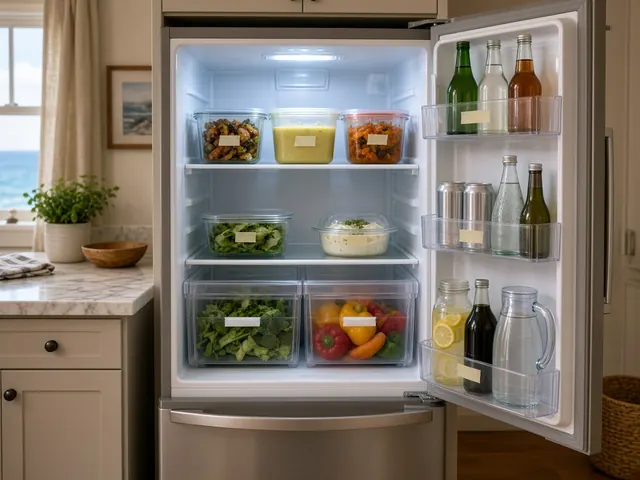
In a small apartment with a single cabinet “pantry,” zones can be shelf rows or even lazy-susan wedges. The principle stays: like with like, daily in front, backups behind. Pair with fridge zones so leftovers and produce do not get lost either.
Maintenance without perfection
Once a week, while putting groceries away, face labels forward and combine half-empty duplicates. Once a month, check for expired items using package dates as your guide—not a social media scare list. The USDA dating explainer clarifies that many dates relate to quality, while some foods have stricter safety rules—read the product context.
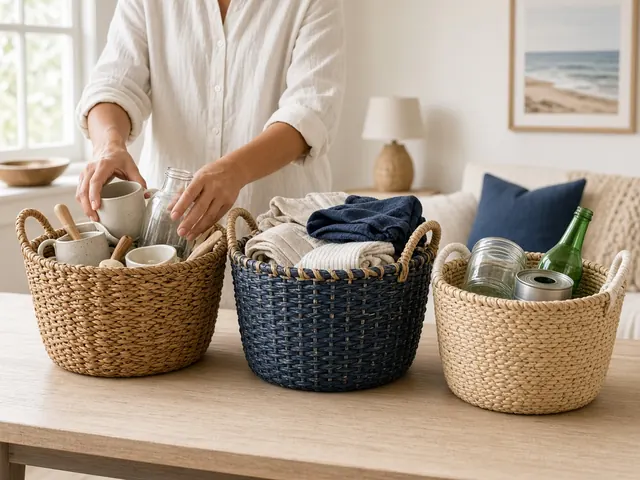
Declutter first if the pantry is packed with unused specialty ingredients. Use keep / donate / discard for unopened foods your local guidance allows you to donate. Do not donate opened or unsafe items.
Common mistakes
- Buying matching jars before discarding stale food.
- Storing heavy glass on high unstable shelves.
- Mixing cleaning chemicals into food zones.
- Creating so many micro-zones that putting groceries away feels like filing taxes.
- Ignoring the counter: a zoned pantry still fails if counters stay a dumping ground—see counter resets.
Conclusion
Pantry zones are a map of how your household actually eats. Daily items in front, backups behind, snacks contained, labels only when helpful. Visibility beats perfection. When you can see what you own, shopping and weeknight cooking both get quieter.
Putting this into a realistic week
Pick one action from this guide and schedule it on a day you already have a little margin. Write the action in plain language on a calendar, sticky note, or the home organization reset planner. Keep the first attempt smaller than your ambition. A finished short session teaches more than an unfinished heroic one.
If other people share the home, tell them what zone you are finishing and what “done” looks like. Shared expectations prevent someone from refilling a cleared space with a new pile while you are still holding the donate bag. Review the result the next morning: Can you find what you need? Did trash leave? Did donate leave? Those three checks matter more than how the space photographs.
Return to this page only when you need a refresher. The goal is a household system you can maintain with ordinary energy, not a continuous reading project. Combine this guide with related reading linked above when you are ready for the next zone—not all at once.
What this guide does not claim
OrganizedNest publishes educational information for US households. We do not claim that an organized home will fix stress, relationships, finances, or sleep problems. We do not invent professional organizer credentials, before-and-after testimonials, or statistics. We do not sell products or place affiliate shopping links inside guides.
Your home, climate, budget, and household size matter. Adjust any checklist. Skip steps that do not help. If a task involves ladder safety, heavy lifting, or hazardous materials, follow product labels and local rules, and get help when needed. Practical home safety overviews from the U.S. Consumer Product Safety Commission are a useful general reference for household hazards unrelated to organizing fashion.