Large decluttering plans look impressive on paper and stall on the first mixed surface. The one-drawer method is deliberately small. You empty one drawer or one shelf, sort it completely, wipe it, return only what belongs, and stop. The win is not square footage. The win is a finished decision you can trust tomorrow morning.
This approach suits kitchens, bathrooms, nightstands, entry tables, and office trays. It is educational guidance for everyday US homes—not a professional organizing service, a shopping list, or a claim that one drawer will transform your life.
Why finishing beats rearranging
Rearranging moves clutter into prettier containers. Finishing removes what should not live there. When a drawer still holds expired coupons, dead pens, and mystery keys, no divider will make it feel calm for long. Containers are tools after decisions, not substitutes for them.
One drawer also trains your pacing. If you can finish a drawer in twenty minutes, you learn how long decisions actually take. That information is more useful than a vague goal to “get organized this year.” People who know their real pace schedule better weekends and fewer all-or-nothing collapses.
High-traffic drawers teach fastest: the junk drawer, the utensil drawer, the bathroom essentials drawer, the entry catch-all. Sentimental boxes can wait until utility zones are steady.
Step-by-step method
- Choose a drawer you open at least weekly.
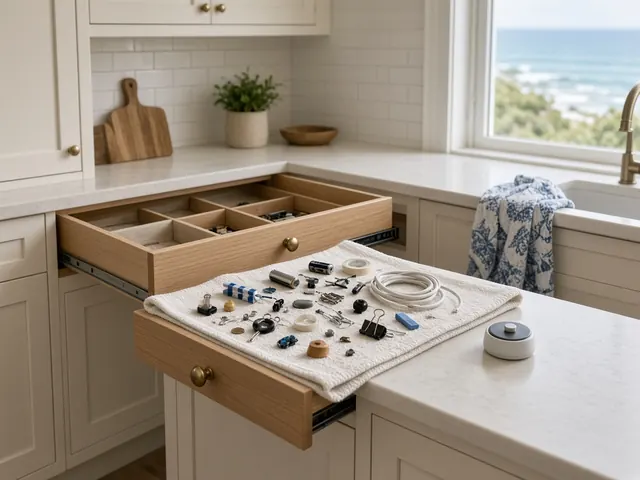
- Lay a towel on a nearby surface. Empty everything onto it.
- Wipe crumbs and dust. A clean drawer reveals volume honestly.
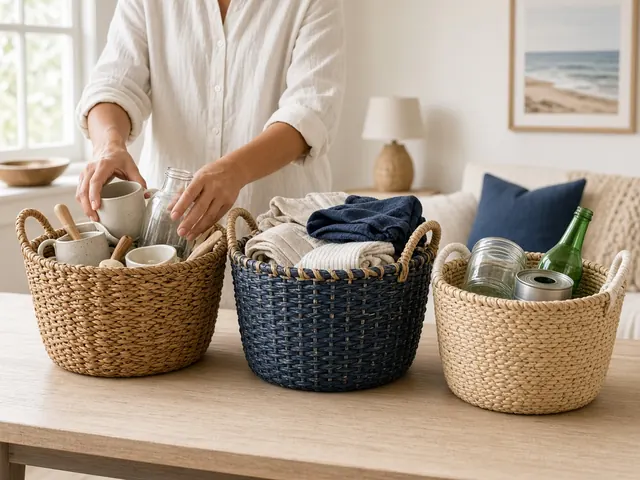
- Sort with keep / donate / discard. Add a small “elsewhere” pile.
- Return keepers in a simple order: daily tools in front, rare tools behind or in a cup.
- Trash leaves the room. Donate goes to the car. Elsewhere items walk to their rooms now.
- No new purchases during the first pass.
- No “maybe” stack left on the towel overnight.
- No borrowing space from the next drawer mid-project.
- No celebrating before trash and donate have exited the living space.
A household example
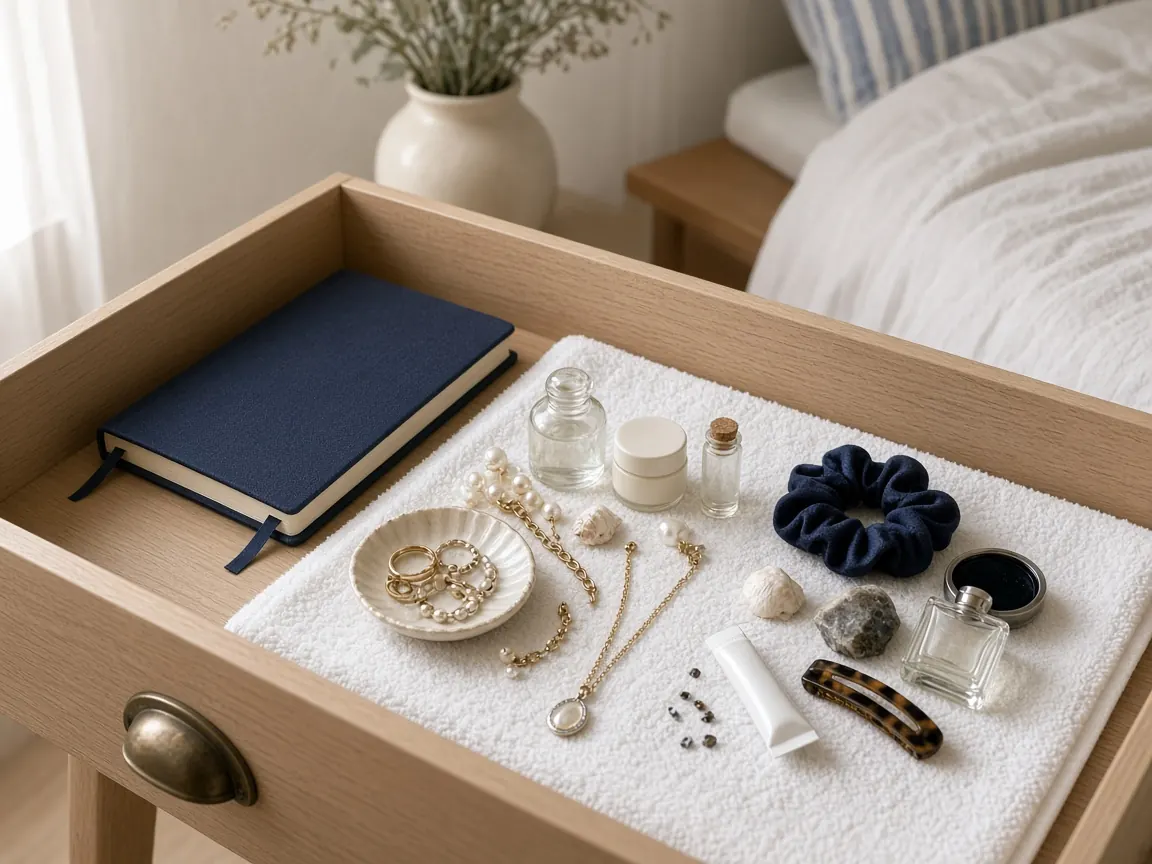
A bathroom drawer holds hair ties, sample lotions, sunscreen from last summer, and a tangled charger. Keep: current sunscreen, hair ties in a small cup, the charger if it still fits a device you own. Discard empty samples and dried products. Donate unopened duplicates you will not use. The drawer closes easily. Tomorrow’s morning routine does not start with archaeology.
In a kitchen utensil drawer, duplicates are the usual culprit. Keep the spatulas and spoons you reach for weekly. Donate extras that still work. Discard melted or cracked tools. Suddenly cooking prep is faster because the drawer opens and the right tool is visible.
When cleaning the empty drawer, ordinary soap and water are enough for most household surfaces. The CDC’s home cleaning page distinguishes routine cleaning from disinfection; decluttering is mostly about decisions, not sterilizing every hinge.
What to do after five drawers
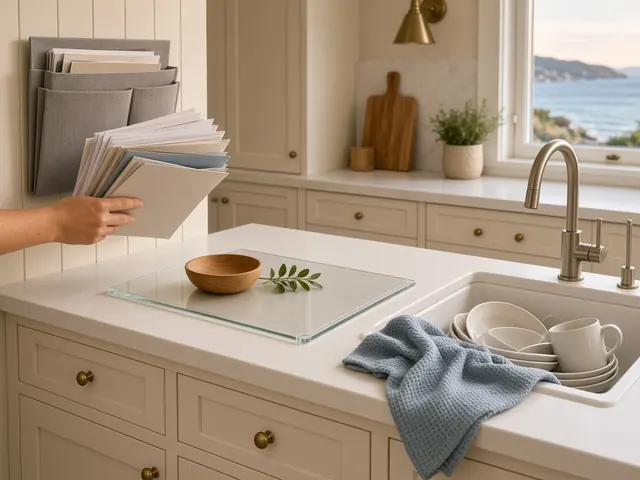
After several finished drawers, patterns appear: too many duplicates, no home for mail, tools living in the wrong room. Those patterns point to the next project—often a counter reset or an entryway drop zone—without requiring a full-house weekend.
Track finished zones on a notepad or in the reset planner if you want a printable list. Checking off finished drawers beats rewriting ambitious schedules you will not keep. Pair the habit with starting without overwhelm so you do not leap from five drawers to the attic in one leap.
Common mistakes
- Starting with a sentimental memory box instead of a utility drawer.
- Stopping after emptying, so the towel becomes the new mess.
- Filling the cleared drawer with items from a different room “just for now.”
- Buying organizers before knowing the keep volume.
- Working three drawers at once and finishing none.
If you share the home, label a shared drawer’s rules in one sentence: “batteries and pens only,” for example. Ambiguous shared drawers refill fastest.
Conclusion
The one-drawer method is small on purpose. Empty, sort, wipe, return, remove exits, stop. Repeat on another day. Finished drawers compound into a home that is easier to reset each evening, which is the real maintenance win—not a single dramatic purge that nobody wants to repeat.
Putting this into a realistic week
Pick one action from this guide and schedule it on a day you already have a little margin. Write the action in plain language on a calendar, sticky note, or the home organization reset planner. Keep the first attempt smaller than your ambition. A finished short session teaches more than an unfinished heroic one.
If other people share the home, tell them what zone you are finishing and what “done” looks like. Shared expectations prevent someone from refilling a cleared space with a new pile while you are still holding the donate bag. Review the result the next morning: Can you find what you need? Did trash leave? Did donate leave? Those three checks matter more than how the space photographs.
Return to this page only when you need a refresher. The goal is a household system you can maintain with ordinary energy, not a continuous reading project. Combine this guide with related reading linked above when you are ready for the next zone—not all at once.
What this guide does not claim
OrganizedNest publishes educational information for US households. We do not claim that an organized home will fix stress, relationships, finances, or sleep problems. We do not invent professional organizer credentials, before-and-after testimonials, or statistics. We do not sell products or place affiliate shopping links inside guides.
Your home, climate, budget, and household size matter. Adjust any checklist. Skip steps that do not help. If a task involves ladder safety, heavy lifting, or hazardous materials, follow product labels and local rules, and get help when needed. Practical home safety overviews from the U.S. Consumer Product Safety Commission are a useful general reference for household hazards unrelated to organizing fashion.