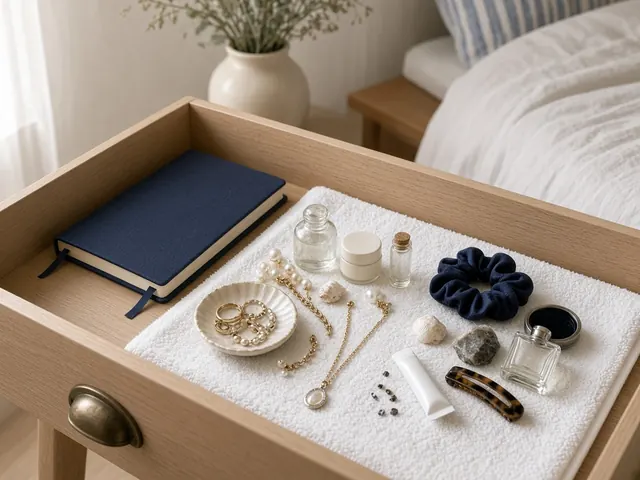
Most decluttering projects fail for a boring reason: they begin as a whole-house ambition. People empty three rooms at once, create a mountain in the hallway, and then lose the evening to decision fatigue. A quieter approach works better for many US households. Choose one zone you can finish in a single sitting, decide what belongs there, and stop while the space still looks better than when you started.
OrganizedNest publishes educational home-organization guidance. This article will not promise that a tidy drawer will fix stress, money worries, or family conflict. It will show you how to start without turning Saturday into a guilt marathon. The methods below are ordinary household habits. They are not a professional organizing consultation, a shopping list, or a personality test.
Why “one zone” beats a whole-house purge
A zone is a container with edges you can see: one drawer, one shelf, one coat hook row, or one section of a counter. Edges matter because they tell you when you are done. Without edges, clutter simply slides into the next surface and the project never earns a finish line. People often feel behind because they measure progress by how much they touched instead of how much they finished.
Whole-house purges also mix categories. Kitchen tools land next to kids’ papers and bathroom samples. Your brain then has to invent rules for unrelated items at the same time. One-zone work keeps the decision set small enough to complete before dinner. That is not a lesser version of organizing. It is how organizing becomes sustainable in homes with jobs, school schedules, and limited energy.
A household example
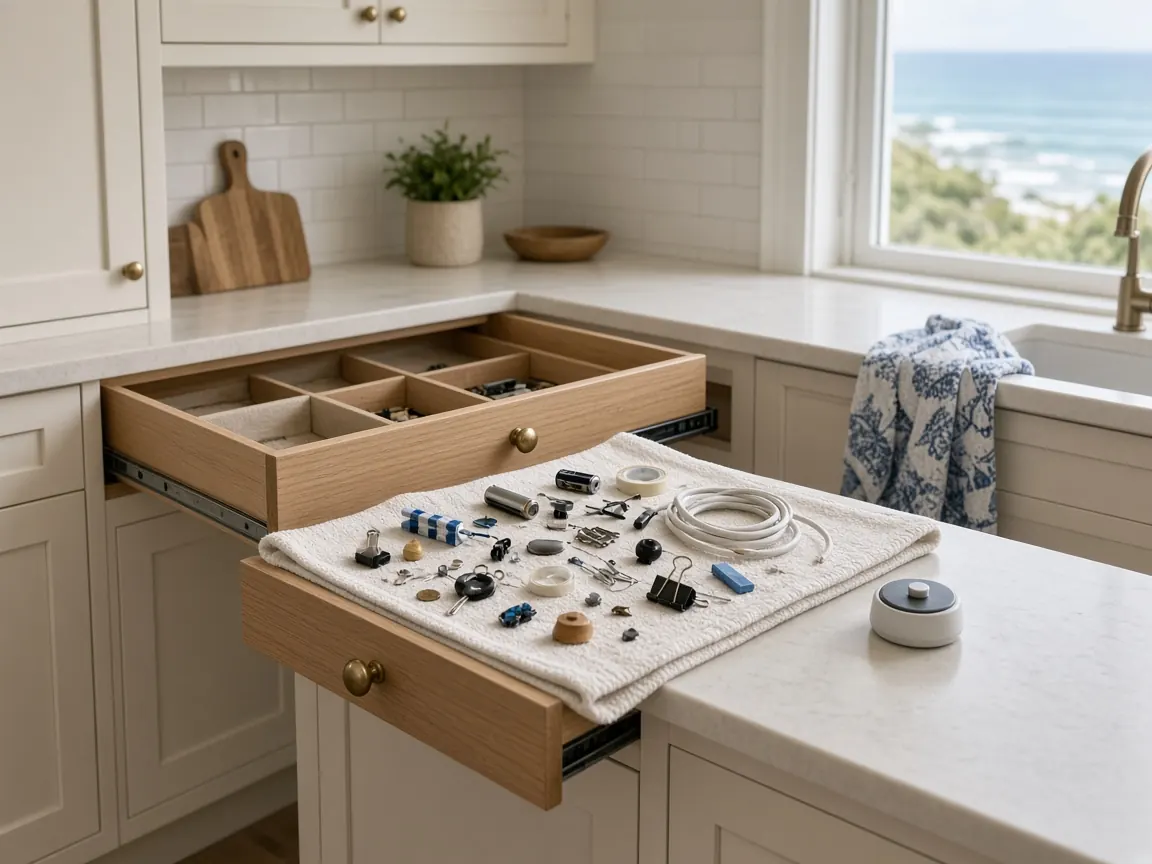
Imagine a two-bedroom apartment where the kitchen junk drawer holds batteries, takeout menus, spare keys, and expired coupons. Instead of “declutter the kitchen,” the plan is “finish the junk drawer in twenty-five minutes.” Everything comes out onto a towel. Keep items return to the drawer in a cup or small tray. Donate or recycle what you can. Trash leaves the apartment the same day. The counter may still have mail, but the drawer is finished—and finished work builds momentum you can feel the next morning when the drawer opens cleanly.
Another example: a living-room side table that collects remotes, charging cables, coasters, and school forms. Treating the tabletop as one zone means everything comes off, the surface is wiped, remotes get a tray, cables get a small cup, and papers move to a defined inbox. You are not solving the entire paperwork system in that session. You are preventing the table from remaining an unmarked landfill.
Prepare before you empty anything
Set a timer you respect. Twenty to forty-five minutes is enough for most drawers and shelves. Gather a trash bag, a donate box, and a “belongs elsewhere” box. Wipe the empty zone once before you return keepers; a clean surface makes it obvious when something does not belong. If you skip the wipe, crumbs and grit make it easier to shove items back without looking.
Decide where donations will go tonight or tomorrow. A donate box that lives in the hallway for six weeks becomes a new clutter pile. The U.S. EPA’s reduce and recycle guidance is a useful reminder that reuse and recycling only help when materials actually leave your home through the right stream. Local rules still win for plastics, batteries, and bulky items.
- Pick one zone with visible edges.
- Set a timer and stop when it ends—even if you feel ambitious.
- Use three exits: trash/recycle, donate, and “belongs in another room.”
- Return only what belongs in this zone.
- Put the donate bag in the car or by the door before you celebrate.
- Take trash to the outdoor bin the same day.
How to decide without inventing a personality quiz
Ask practical questions. Have I used this in the last year? Do I have a working duplicate? Is it broken in a way I will realistically repair this month? Does it belong to a hobby I still do? If the answer is mostly no, it does not need a premium storage solution. It needs an exit. Complicated scoring systems look smart and slow people down.
Sentiment is allowed. Keep a small number of meaningful items on purpose, not by accident. The goal is not zero possessions. The goal is a home where weekly items have homes and forgotten items stop renting prime space. If two people share the home, agree on shared zones before one person discards the other’s belongings.
For a fuller sorting map, see keep, donate, discard. For finishing tiny spaces completely, see the one-drawer method. After a few zones, a short nightly habit helps more than another purge—try the ten-minute evening reset.
Common mistakes
- Starting with the garage, attic, or sentimental closet on day one.
- Buying bins before you know what will remain.
- Leaving “decide later” piles on the dining table overnight.
- Declaring the project done while donations still sit in a hallway bag.
- Comparing your home to staged photos or influencer timelines.
- Working past exhaustion and undoing tomorrow’s goodwill.
A simple first-week checklist
- List three zones you can finish in under forty-five minutes each.
- Finish one zone completely, including trash taken out.
- Do a second zone on another day—not the same night if you are tired.
- Note which decisions felt easy; reuse that pattern.
- Attach a short evening reset so new clutter does not refill the cleared space. The home organization reset planner can hold those tasks without claiming your house will become perfect.
When to pause
Pause if you feel dizzy, angry, or tempted to throw away someone else’s belongings without agreement. Shared homes need shared rules. Pause also for hazardous materials—paint, chemicals, batteries—and follow local disposal guidance rather than tossing them in a regular bag. Basic household cleaning habits from the CDC’s cleaning guidance can sit alongside decluttering, but organization is not the same as disinfection.
Conclusion
Starting decluttering is less about motivation speeches and more about finished edges. One zone, a timer, three exits, and a donation bag that leaves the building will teach you more than a weekend of half-done piles. Build the habit of completion first. Larger projects become easier once your home has a few truly finished corners you can maintain with ordinary weeknight attention.