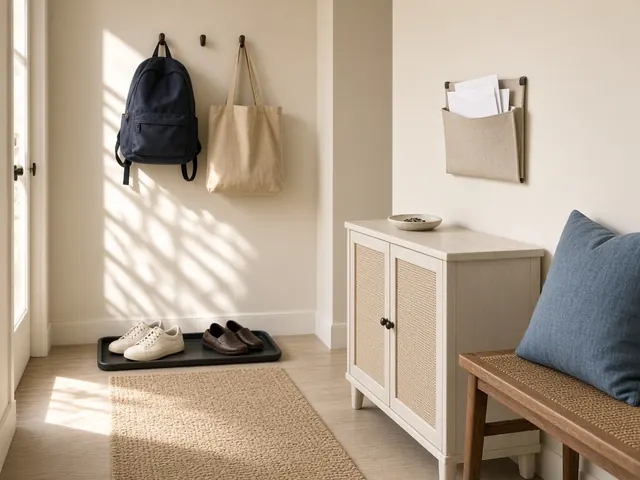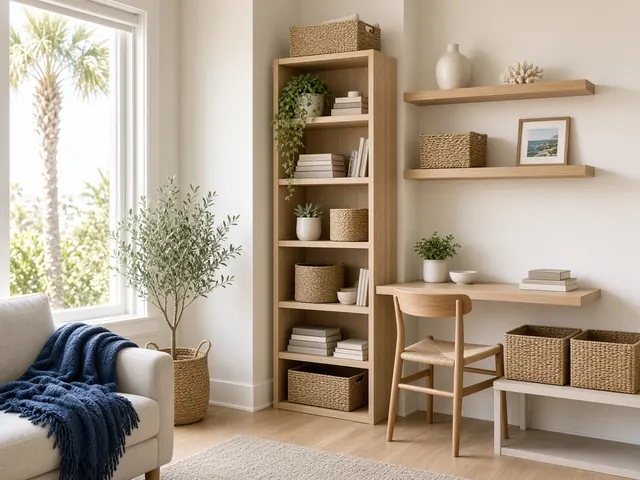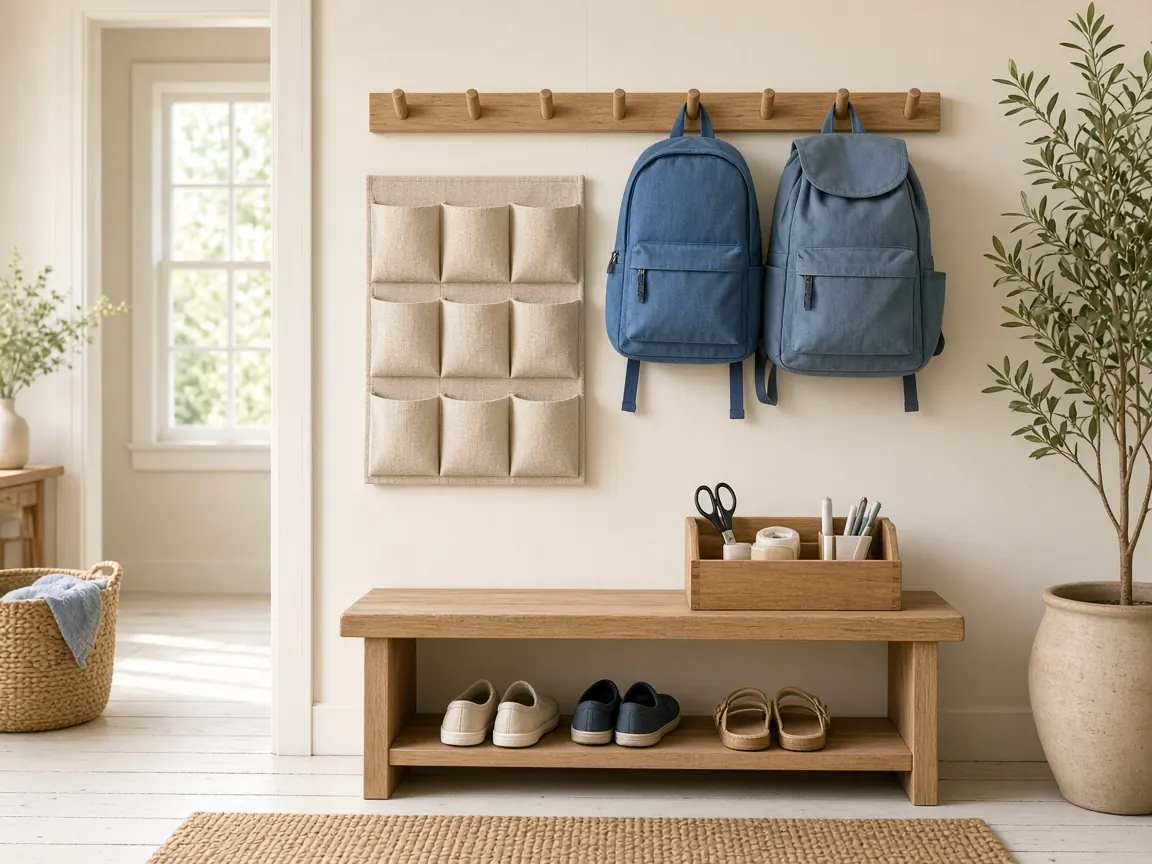
Shared homes stall when everything is “anyone’s problem” and nowhere has a name. Family storage zones reduce friction by giving backpacks, papers, shared supplies, and sports gear predictable homes that multiple people can use without a lecture each night.
This guide avoids parenting dogma. It offers household logistics. Adjust for ages, abilities, and dignity.
Name the zones
- Launch pad: backpacks, library books, permission slips.
- Shared supplies: scissors, tape, chargers that truly are communal.
- Sports/gear corner: one bin per activity if volume requires.
- Paper inbox: one in-tray, not five counters.
- Personal zones: respect bedrooms as much as possible.
Rules short enough to remember
Long chore constitutions fail. Try two sentences: “Backpacks hang on these hooks after school.” “Papers go in the inbox before screens.” Review weekly for ten minutes instead of rewriting the system monthly.
- Tour the home and pick zone locations that match traffic.
- Remove competing catch-alls.
- Label at kid-readable heights when relevant.
- Practice the path once together.
- Attach a nightly reset—evening reset.
Entryways often host the launch pad—see drop zone setup. Small homes can still zone vertically—apartment storage.
Household example
A family with two school-age kids fights every morning about missing library books. They install a wall pocket per child by the door. Books land there on return. Mornings still have weather and breakfast complexity, but the library search ends.
Common mistakes
- Zones too far from where the behavior happens.
- Shared supply drawers that become junk drawers.
- Punitive systems that shame instead of clarifying.
- No adult follow-through on the same rules.
Conclusion
Shared zones work when they are named, reachable, and reset. Keep rules short, locations obvious, and maintenance light. The point is less friction, not military uniformity.
Putting this into a realistic week
Pick one action from this guide and schedule it on a day you already have a little margin. Write the action in plain language on a calendar, sticky note, or the home organization reset planner. Keep the first attempt smaller than your ambition. A finished short session teaches more than an unfinished heroic one.
If other people share the home, tell them what zone you are finishing and what “done” looks like. Shared expectations prevent someone from refilling a cleared space with a new pile while you are still holding the donate bag. Review the result the next morning: Can you find what you need? Did trash leave? Did donate leave? Those three checks matter more than how the space photographs.
Return to this page only when you need a refresher. The goal is a household system you can maintain with ordinary energy, not a continuous reading project. Combine this guide with related reading linked above when you are ready for the next zone—not all at once.
What this guide does not claim
OrganizedNest publishes educational information for US households. We do not claim that an organized home will fix stress, relationships, finances, or sleep problems. We do not invent professional organizer credentials, before-and-after testimonials, or statistics. We do not sell products or place affiliate shopping links inside guides.
Your home, climate, budget, and household size matter. Adjust any checklist. Skip steps that do not help. If a task involves ladder safety, heavy lifting, or hazardous materials, follow product labels and local rules, and get help when needed. Practical home safety overviews from the U.S. Consumer Product Safety Commission are a useful general reference for household hazards unrelated to organizing fashion.